Polymer base selection determines how an LSZH sheath balances flexibility, tensile strength, flame retardancy, smoke generation, temperature resistance, cracking risk, and extrusion behavior. EVA and elastomer-modified polyolefins generally support flexible cable jackets, while PE and PP offer different combinations of stiffness, abrasion resistance, and temperature performance. The correct base must be selected together with flame-retardant fillers, additives, cable geometry, operating conditions, and required standards.
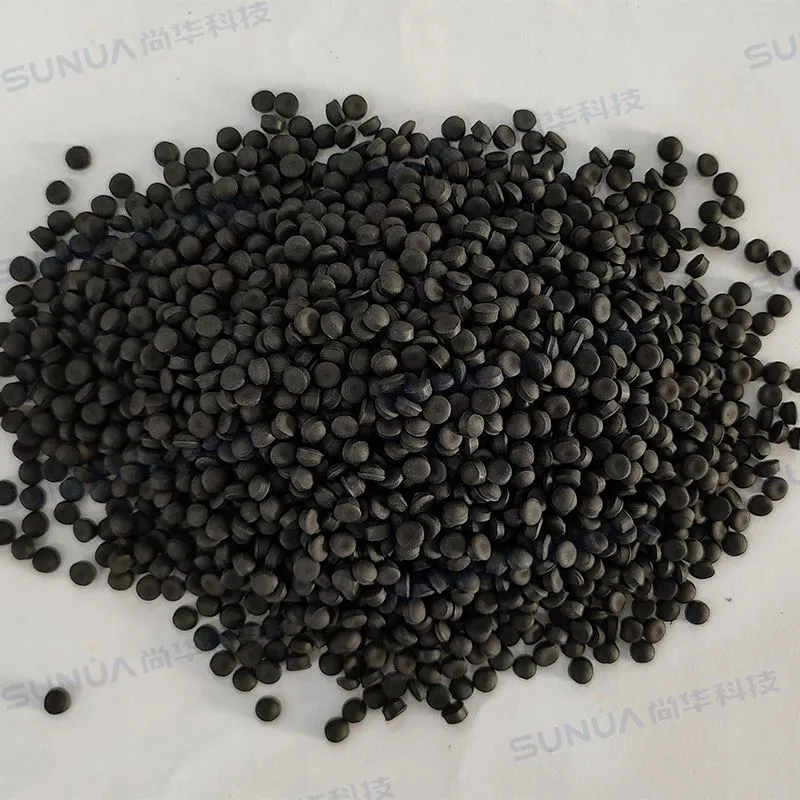
Polymer base selection is the process of choosing the principal resin or resin blend used in an LSZH Sheath Compound. The base polymer forms the continuous phase around flame-retardant fillers, processing aids, pigments, stabilizers, and other additives. Its molecular weight, crystallinity, polarity, melt viscosity, hardness, and elongation behavior influence the final cable jacket before testing begins.
LSZH compounds must reduce halogen acid gas emissions and smoke compared with conventional halogen-containing materials. However, removing halogens does not automatically produce a sheath that passes every mechanical, flame, smoke, or extrusion requirement. The compound must be engineered so that the polymer base remains sufficiently cohesive after the addition of mineral flame retardants, which may represent a substantial portion of the formulation by weight.
The selection decision should begin with the finished cable rather than the resin catalogue. A building wire installed in a fixed conduit may prioritize flame classification and dimensional stability, while a robotic industrial cable may require repeated bending, abrasion resistance, and resistance to stress cracking. For this reason, the best LSZH sheath polymer is application-specific rather than universal.
The polymer base affects LSZH sheath performance through five linked mechanisms: matrix strength, filler dispersion, chain mobility, thermal behavior, and melt flow. A flexible base can reduce bending stress but may require additional reinforcement to meet tensile or abrasion targets. A highly crystalline base can improve stiffness and dimensional stability, but excessive crystallinity may increase low-temperature cracking risk when the sheath is bent or impacted.
Flame-retardant loading creates a further trade-off. Mineral flame retardants can reduce flame spread, smoke density, and corrosive gas emissions, but high loading may lower elongation, increase compound viscosity, and raise the risk of surface defects during extrusion. A base polymer with suitable polarity and melt compatibility helps maintain filler dispersion and reduces localized weak points.
Processing conditions also depend on the polymer base. Melt temperature, screw design, die pressure, cooling rate, and line speed must be adjusted to the compound’s rheological behavior. If the polymer has poor compatibility with the filler package, the cable jacket may show roughness, die lines, voids, melt fracture, or inconsistent diameter even when the formulation passes laboratory tests.
| Polymer-base characteristic | Typical sheath effect | Main risk if poorly matched |
|---|---|---|
| High chain mobility | Better flexibility and elongation | Lower stiffness and abrasion resistance |
| Higher crystallinity | Increased stiffness and dimensional stability | Cold cracking or reduced elongation |
| Good filler compatibility | More uniform mechanical and flame performance | Filler agglomeration and stress concentration |
| Controlled melt viscosity | Stable extrusion and surface finish | Die pressure fluctuation or melt fracture |
| Thermal stability | Better performance at elevated temperature | Degradation, discoloration, or premature aging |
| Elastomer modification | Improved bend performance and crack resistance | Reduced hardness or increased material cost |
A useful LSZH polymer base comparison must examine the resin and the complete formulation. EVA, PE, PP, and elastomer-modified polyolefins can all be used in cable applications, but they behave differently when combined with mineral flame retardants. TPU and other thermoplastic elastomers may also be considered when flexibility, abrasion, or oil resistance is more important than the lowest material cost.
EVA contains vinyl acetate groups that increase polarity and chain flexibility compared with many standard polyethylene grades. This can improve compatibility with selected mineral flame retardants and support higher elongation in the finished sheath. EVA is often considered for flexible building wires, control cables, and cable jackets that need easier bending during installation.
The main limitation is that EVA grade selection matters considerably. Higher vinyl acetate content may improve flexibility and filler interaction, but it can also alter hardness, tensile behavior, water resistance, and melt processing. The formulation must be tested after aging because the initial elongation value does not predict long-term performance by itself.
EVA is not automatically the best choice for every fire-rated cable. If the compound contains a high filler concentration, the final balance may still become stiff or brittle unless the resin blend and additive package provide sufficient chain mobility. The correct decision should compare tensile strength, elongation, cold-bend behavior, flame results, smoke emission, and extrusion stability using the same specimen preparation method.
PE provides a useful foundation for sheath compounds that require moisture resistance, abrasion resistance, and dimensional stability. Different PE structures, including low-density, linear low-density, medium-density, and high-density grades, produce different hardness and flexibility profiles. Medium-density polyethylene is often selected where the sheath needs a balance between mechanical protection and processing stability.
PE-based materials can be suitable for industrial, outdoor, communication, and infrastructure cables, but the exact grade must match the cable’s bending and environmental requirements. Higher-density grades may improve surface hardness and resistance to mechanical damage, while lower-density grades generally provide greater flexibility. A PE sheath that is too stiff for the installation method can transfer stress to the conductor, screen, or inner insulation during bending.
PE also requires careful evaluation of flame-retardant compatibility. Mineral filler loading may increase stiffness and reduce elongation, particularly if dispersion is incomplete. For outdoor cables, the compound should additionally be assessed for ultraviolet exposure, water absorption, thermal aging, and resistance to cracking after environmental conditioning.
PP generally offers higher stiffness and thermal resistance than many flexible PE grades. It can support cable designs that require dimensional control, elevated-temperature stability, and resistance to deformation under mechanical load. These characteristics may be useful in fixed installations, structured cabling components, industrial assemblies, and selected transport applications.
The trade-off is reduced flexibility compared with softer EVA or elastomer-modified systems. A PP-rich sheath may be unsuitable for cables that must pass through tight bends, move continuously, or tolerate repeated installation cycles. Copolymer grades or blended systems may reduce brittleness, but the result must be verified through bend, impact, tensile, elongation, and aging tests.
PP processing can be efficient when the extrusion equipment is properly adjusted. However, the compound’s high filler content may increase die pressure and reduce the available processing window. Screw configuration, melt temperature, cooling conditions, and haul-off speed should be recorded during pilot production so that laboratory performance can be reproduced on the production line.
Elastomer-modified polyolefins combine a polyolefin matrix with a flexible phase that increases chain mobility and reduces crack propagation. They are often considered for flexible LSZH jackets, industrial cables, moving cables, and applications exposed to repeated bending. The flexible phase can absorb mechanical strain that would otherwise concentrate around mineral filler particles.
The principal design challenge is maintaining sufficient tensile strength and hardness. Excessive elastomer content may reduce abrasion resistance, dimensional stability, or resistance to deformation at elevated temperatures. Compatibility between the elastomer and the base polyolefin is important because poor phase adhesion can create weak interfaces and inconsistent aging behavior.
This material family is often appropriate when cracking resistance is a primary requirement. The buyer should still request evidence from cold-bend, heat-aging, tensile retention, elongation retention, and surface inspection tests. A claim of anti-cracking performance is meaningful only when the test temperature, conditioning time, specimen geometry, and acceptance criteria are documented.
TPU can provide strong abrasion resistance, flexibility, and resistance to selected oils and chemicals. It may be considered for industrial, automation, mobile equipment, and specialty cable applications where mechanical wear is more severe than in ordinary building wire. However, TPU-based LSZH formulations may have higher material costs and narrower processing requirements than standard polyolefin systems.
TPU also needs careful evaluation for hydrolysis, moisture sensitivity, thermal aging, and compatibility with flame-retardant additives. The formulation may require drying controls before extrusion, and moisture contamination can cause surface defects or molecular-weight reduction. For cost-sensitive fixed cables, TPU may provide more performance than necessary, while for demanding moving cables its abrasion and flexing behavior may justify the additional cost.
LSZH sheath flexibility and mechanical strength depend on the interaction between the polymer structure and filler loading. Flexibility is influenced by glass-transition behavior, crystallinity, elastomer content, plasticization effects, and the amount and particle size of mineral flame retardant. Mechanical strength depends on polymer cohesion, filler dispersion, interfacial adhesion, sheath thickness, and the presence of defects created during extrusion.
A cable manufacturer should evaluate tensile strength and elongation before and after thermal aging. The comparison should include at least the original values, aged values, percentage retention, and the conditioning temperature and duration. A material with greater initial elongation may still perform poorly if it loses a large percentage of that elongation after aging.
Abrasion resistance and tear resistance are also important for industrial and installation-intensive cables. Harder PE or PP systems may resist surface wear better than softer EVA-rich systems, but hardness alone does not prevent cracking. The jacket must withstand contact pressure, bending, pulling, and localized stress without developing a crack that can grow through the sheath thickness.
| Failure mode | Likely material or process cause | Recommended investigation |
|---|---|---|
| Cold cracking | Excessive crystallinity, low chain mobility, poor elastomer balance | Cold-bend and impact testing after conditioning |
| Stress concentration | Filler agglomeration or weak polymer-filler interface | Microscopy, ash analysis, dispersion inspection |
| Melt fracture | Excessive viscosity, high shear, unsuitable die geometry | Extrusion pressure and surface examination |
| Low elongation | Excessive filler loading or insufficient matrix continuity | Tensile test and formulation comparison |
| Surface roughness | Poor dispersion, moisture, or unstable cooling | Moisture control, die inspection, line-speed study |
| Shrinkage or deformation | Inadequate thermal stability or cooling control | Hot-set, dimensional, and thermal-aging tests |
LSZH flame retardancy and smoke emission are controlled by the complete compound system. The polymer base supplies the combustible matrix, while mineral flame retardants interrupt combustion through endothermic decomposition, dilution, protective residue formation, or reduction of available fuel. The final performance depends on filler type, loading, particle size, surface treatment, dispersion, sheath thickness, and cable construction.
A base polymer with good filler compatibility can produce a more continuous protective structure during burning. Poor dispersion may create fuel-rich zones and weak points where flame propagation accelerates. The same nominal filler percentage can therefore produce different results in two compounds if the polymer polarity, melt viscosity, and mixing conditions differ.
Relevant testing may include IEC 60332 for flame propagation, IEC 60754 for halogen acid gas emissions, and IEC 61034 for smoke density. Construction-product applications may also require CPR classification, including classes such as Eca or B2ca with additional smoke and acidity parameters. The exact requirement depends on the installation environment, cable type, national adoption, and project specification.
For railway and tunnel cables, smoke and corrosive gas control can be as important as flame spread. In a confined space, dense smoke reduces visibility and corrosive gases may damage electrical and control equipment. A polymer base that supports low smoke and low acid-gas performance must still retain mechanical integrity after the required aging and installation tests.
Railway cables typically require controlled flame spread, smoke emission, and corrosive gas behavior, along with mechanical durability during installation and service. The polymer base should be evaluated against the applicable railway fire-performance framework, including the specified hazard level and cable construction. Elastomer-modified polyolefins or carefully balanced EVA/polyolefin blends may be considered when flexibility and crack resistance are required.
The selection should include vertical flame testing, smoke evaluation, acidity or conductivity testing, tensile and elongation testing, heat aging, and low-temperature performance. Where cables are exposed to vibration, the sheath should also be examined for fatigue and interface damage. A formulation that passes a short flame test but cracks during repeated movement may create a field failure unrelated to its initial fire classification.
Tunnel cables face restricted ventilation and may be exposed to pulling forces, abrasion, moisture, and temperature variation. Low smoke emission is particularly important because smoke accumulation can impair evacuation and emergency response. The sheath design should therefore balance flame performance with smoke density, mechanical strength, and resistance to moisture-related degradation.
PE-rich systems may provide useful moisture resistance and abrasion behavior, while EVA or elastomer modification can improve installation flexibility. The correct choice depends on whether the cable is fixed, suspended, pulled through ducts, or exposed to repeated movement. Validation should include cable-level fire tests rather than relying only on compound plaques.
Data-center cables are often installed in dense trays, raised floors, vertical pathways, and confined equipment spaces. The sheath may need a specified CPR class or another regional fire-performance classification, while maintaining manageable installation force and acceptable bend radius. Excessively stiff compounds can increase installation stress and complicate routing around racks and panels.
An LSZH polyolefin sheath compound for data communication cable should be assessed for flame propagation, smoke density, acidity, tensile performance, elongation, dimensional stability, and compatibility with the cable’s insulation and shielding layers. Electrical properties should also be tested at the finished-cable level because filler loading and moisture can affect insulation resistance and capacitance behavior.
Industrial cables may encounter oil, abrasion, impact, vibration, repeated bending, and elevated temperatures. A flexible EVA or elastomer-modified polyolefin can support movement, but it may need reinforcement through the formulation to achieve the required abrasion and tensile results. TPU can be considered where mechanical wear and chemical exposure justify a higher material cost.
The manufacturer should define the bending cycle, bend radius, travel length, speed, load, and environmental conditioning before selecting the polymer. Without these parameters, “flexible cable” is not a sufficiently precise design target. Production validation should compare conductor resistance, sheath diameter, surface condition, tensile retention, elongation retention, and visual cracking after the required cycles.
Public-building cables often prioritize flame classification, smoke control, low corrosive gas emission, and predictable installation behavior. Fixed building wire may tolerate a stiffer formulation than a flexible control cable, allowing greater use of PE or PP for dimensional stability. However, the selected material still needs to meet the project’s fire and mechanical specifications after aging.
SUNUA’s listed LSZH FR polyolefin sheath materials are positioned for cable applications requiring flame-retardant and crack-resistant behavior. The company identifies product ranges covering IEC 60332-1 through IEC 60332-3-22 and CPR classes from Eca to B2ca(d0,t1,a1), with OEM formulation options. Buyers should request the specific grade datasheet, batch test records, processing recommendations, and third-party or project-relevant test evidence before approving a compound.
Record the cable’s installation type, minimum and maximum operating temperature, bending frequency, bend radius, exposure to water or chemicals, required sheath hardness, and target service life. Identify whether the cable is intended for railway, tunnel, data-center, industrial, photovoltaic, public-building, or general infrastructure use. These parameters determine whether flexibility, abrasion, smoke, temperature, or dimensional stability receives the highest weighting.
The buyer should also define compliance requirements before requesting samples. List the required versions of IEC 60332, IEC 60754, IEC 61034, CPR classification, railway standards, customer specifications, or national regulations. A compound cannot be approved by the phrase “LSZH compliant” alone because the test scope and acceptance limits vary by application.
Use EVA or elastomer-modified polyolefin when repeated bending and crack resistance dominate. Consider PE when moisture resistance, abrasion resistance, and dimensional stability are more important. Consider PP or PP-containing blends when stiffness and elevated-temperature dimensional control are required, and assess TPU when abrasion and chemical resistance justify higher material cost.
Do not select the base polymer separately from the flame-retardant package. Request evidence that the resin maintains acceptable tensile strength and elongation at the intended filler loading. The most useful comparison uses the same sheath thickness, conductor design, extrusion equipment, conditioning procedure, and test laboratory for every candidate.
Review filler dispersion, moisture content, melt flow, compound density, recommended extrusion temperature, and die pressure behavior. Mineral flame retardants can increase density and viscosity, which affects material consumption, screw torque, cooling demand, and line speed. A compound that requires repeated production stops may create more total cost than a material with a slightly higher purchase price but a wider stable processing window.
During trials, record melt temperature, head pressure, screw speed, haul-off speed, cooling-water temperature, sheath diameter, ovality, and surface condition. These measurements allow the manufacturer to identify whether a defect comes from the formulation, equipment, moisture, or cooling system. Production records should be retained by batch so that quality deviations can be traced to specific raw-material lots.
Test for tensile strength, elongation, aging retention, abrasion, tear, cold bend, heat shock, and dimensional stability as required by the cable design. Add smoke density, flame propagation, halogen acid gas, acidity, and conductivity testing when required by the specification. For flexible cables, conduct repeated-bending or torsion validation using the actual cable construction rather than relying only on dumbbell specimens.
The validation plan should include acceptance limits, sample quantity, conditioning conditions, and retest rules. For example, a cold-cracking study should specify the temperature, dwell time, mandrel diameter, bending speed, and inspection method. This level of detail is necessary to distinguish a true polymer-selection problem from an extrusion or cable-construction problem.
| Application priority | Preferred starting point | Reason | Tests requiring emphasis |
|---|---|---|---|
| Flexible building wire | EVA or flexible polyolefin blend | Higher elongation and easier bending | Tensile, elongation, heat aging, cold bend |
| Fixed public-building cable | PE, EVA/PE, or balanced polyolefin | Fire performance with dimensional control | IEC 60332, IEC 60754, IEC 61034, CPR tests |
| Railway cable | Elastomer-modified polyolefin or EVA blend | Flexibility, crack resistance, controlled smoke | Fire, smoke, acidity, vibration, aging |
| Tunnel cable | Low-smoke polyolefin system | Reduced smoke and corrosive emissions | Smoke density, flame spread, gas acidity |
| Data-center cable | Balanced EVA/polyolefin compound | Installation flexibility and fire compliance | CPR-related tests, smoke, mechanical, electrical |
| Industrial moving cable | Elastomer-modified polyolefin or TPU | Repeated bending and abrasion | Flexing, abrasion, oil, tensile retention |
| Outdoor or photovoltaic cable | PE-based or stabilized polyolefin system | Environmental and moisture resistance | UV, water, heat aging, cold bend, tensile |
| High-stiffness jacket | PP-containing blend | Dimensional stability and hardness | Heat deformation, impact, abrasion, flame tests |
The difference between LSZH and PVC cable materials is primarily the chemistry of the polymer and flame-retardant system. PVC contains chlorine and can generate hydrogen chloride during combustion, while LSZH compounds are formulated without halogenated polymers and are designed to limit smoke and corrosive gas emissions. LSZH systems commonly rely on mineral flame retardants and polyolefin or elastomer-based matrices.
PVC may provide easier processing, lower formulation complexity, and favorable flexibility in many general-purpose cable designs. LSZH compounds can require higher filler loading, tighter moisture control, and more careful extrusion adjustment. The comparison should therefore include total material usage, line speed, scrap rate, testing cost, fire compliance, smoke performance, and installation requirements rather than resin price alone.
For a fair LSZH sheath material comparison, use the same cable diameter, sheath thickness, extrusion output, and performance tests. A lower-cost PVC compound may not be an acceptable alternative when the project requires halogen-free behavior. Conversely, an LSZH compound may be unnecessary for a low-risk application if the applicable specification does not require reduced smoke or corrosive gas emissions.
A professional buyer should evaluate a compound manufacturer through documented controls rather than product descriptions. Check whether the supplier maintains ISO 9001 quality-management certification, environmental or occupational certifications where relevant, incoming raw-material inspection, batch traceability, retained samples, and calibrated test equipment. SUNUA identifies ISO 9001, ISO 14001, and ISO 45001 certifications and lists LSZH, PE, RoHS, and REACH-related documentation in its company materials.
Delivery risk should be evaluated through more than a quoted lead time. Ask about standard stock grades, minimum order quantity, production capacity, batch-release timing, packaging specifications, shelf-life controls, and contingency arrangements for key fillers or polymer resins. A supplier offering OEM formulation should also define sample approval, pilot-batch timing, change-notification procedures, and the conditions under which a raw-material substitution requires requalification.
Total cost of ownership includes resin price, compound density, kilograms per kilometer, extrusion speed, scrap percentage, energy consumption, testing, packaging, freight, and field-failure exposure. A compound with a 10% higher price per kilogram could have a lower cable cost if its density allows reduced mass per kilometer or its processing stability reduces scrap. These calculations should be based on measured production data from a representative run, not on catalogue assumptions.
Begin by preparing a one-page requirement sheet with the cable type, conductor size, sheath thickness, operating temperature, bend radius, environmental exposure, target fire class, and required standards. Request at least two polymer-base candidates, such as an EVA-rich formulation and an elastomer-modified polyolefin, instead of approving a single resin without comparison. Ask the supplier to provide technical data, safety documentation, recommended processing conditions, and available compliance reports.
Run a controlled extrusion trial using the intended production line. Record die pressure, melt temperature, screw speed, line speed, cooling conditions, diameter variation, surface defects, and scrap. Retain samples from the beginning, middle, and end of the run because thermal history and filler dispersion may change during extended production.
Finally, compare the candidates using a weighted scorecard. Assign separate scores for flame propagation, smoke emission, mechanical retention, flexibility, crack resistance, processing stability, supply continuity, and total cost per kilometer. The best polymer base is the one that meets the required standard with a repeatable process and acceptable lifecycle cost, not simply the one with the lowest purchase price.
How Polymer Base Selection Affects LSZH Sheath Performance depends on how the resin structure interacts with flame-retardant fillers, cable construction, processing conditions, and service environment. EVA and elastomer-modified polyolefins are useful starting points for flexible and crack-resistant jackets, while PE and PP can provide greater moisture resistance, stiffness, abrasion resistance, or dimensional stability. TPU may be justified for demanding industrial cables where abrasion and chemical exposure outweigh material-cost concerns.
Manufacturers should select the polymer base through a documented matrix that links application, operating temperature, flexibility, mechanical strength, flame retardancy, smoke emission, processing window, and validation testing. Compliance should be confirmed through the required IEC 60332, IEC 60754, IEC 61034, CPR, railway, or project-specific tests. Suppliers such as SUNUA can be evaluated through product documentation, OEM development capability, certification records, batch traceability, and production-trial data.
The next practical step is to compare two or more LSZH sheath compounds on the same cable line and calculate performance retention, scrap rate, kilograms per kilometer, and testing cost. This approach helps balance LSZH sheath flexibility, durability, flame retardancy, low smoke, electrical performance, and manufacturing requirements without relying on unverified material claims.
A: SUNUA’s LSZH FR Polyolefin Sheath Compound is the closest match. It is positioned for low-smoke, halogen-free flame retardancy and crack-resistant cable sheathing, with grades covering different flame-performance requirements. Buyers should compare the recommended grade against the cable’s bend radius, operating temperature, sheath thickness, and required tests.
A: Choose an EVA-rich or elastomer-modified polyolefin system when flexibility, repeated bending, and crack resistance are priorities. Consider a PE-based compound when moisture resistance, abrasion resistance, and dimensional stability are more important. The final choice should be confirmed through tensile, elongation, aging, cold-bend, flame, smoke, and extrusion trials using the actual cable construction.
A: Request the specific grade datasheet, safety documentation, recommended extrusion conditions, batch test records, and applicable compliance evidence. Depending on the project, confirm performance against IEC 60332, IEC 60754, IEC 61034, CPR classification, or customer-specific requirements. SUNUA also identifies OEM availability and quality-system certifications including ISO 9001, ISO 14001, and ISO 45001.
A: SUNUA lists LSZH FR Polyolefin Sheath Compound for applications requiring low-smoke, halogen-free flame-retardant performance and anti-cracking behavior. Its stated product range covers flame classes from CPR Eca to B2ca(d0,t1,a1) and IEC 60332-1 through IEC 60332-3-22. The buyer should request project-relevant test evidence and confirm that the selected grade meets the finished-cable specification.
A: Provide the cable type, conductor size, sheath thickness, operating-temperature range, minimum bend radius, installation method, exposure to water or chemicals, target hardness, required flame and smoke classification, applicable standards, and expected annual demand. Also request processing recommendations and sample quantities so the compound can be evaluated on the intended extrusion line. SUNUA states that OEM formulations and free samples are available for inquiry.


