Higher extrusion speed can increase cable output, but it also raises shear heating, melt pressure, draw-down, surface-defect risk, porosity, and dimensional variation unless screw speed, temperature, die geometry, cooling, and haul-off are balanced. A controlled process should: 1) establish a stable baseline, 2) increase speed in measured increments, 3) record pressure and temperature, 4) verify dimensions and defects, and 5) confirm mechanical, electrical, smoke, and flame performance.
How Extrusion Speed Influences LSZH Sheath Performance is a process-control question, not simply a question of selecting the fastest line setting. LSZH Sheath Compound usually contains a high loading of mineral flame-retardant fillers, such as aluminum trihydrate or magnesium hydroxide, within a polyolefin matrix. This formulation can provide low smoke and halogen-free behavior, but it may also increase melt viscosity, abrasion, moisture sensitivity, and sensitivity to excessive shear.
For cable manufacturers, the correct extrusion speed must balance output with sheath thickness, surface finish, tensile strength, elongation, adhesion, electrical reliability, and fire compliance. A speed increase that raises kilograms per hour by 10% but causes 3% scrap, repeated die cleaning, or failed flame tests may reduce the actual production value. The most reliable approach is to treat speed as one variable within a controlled system involving screw design, melt temperature, pressure, draw-down ratio, cooling, haul-off, and online diameter measurement.
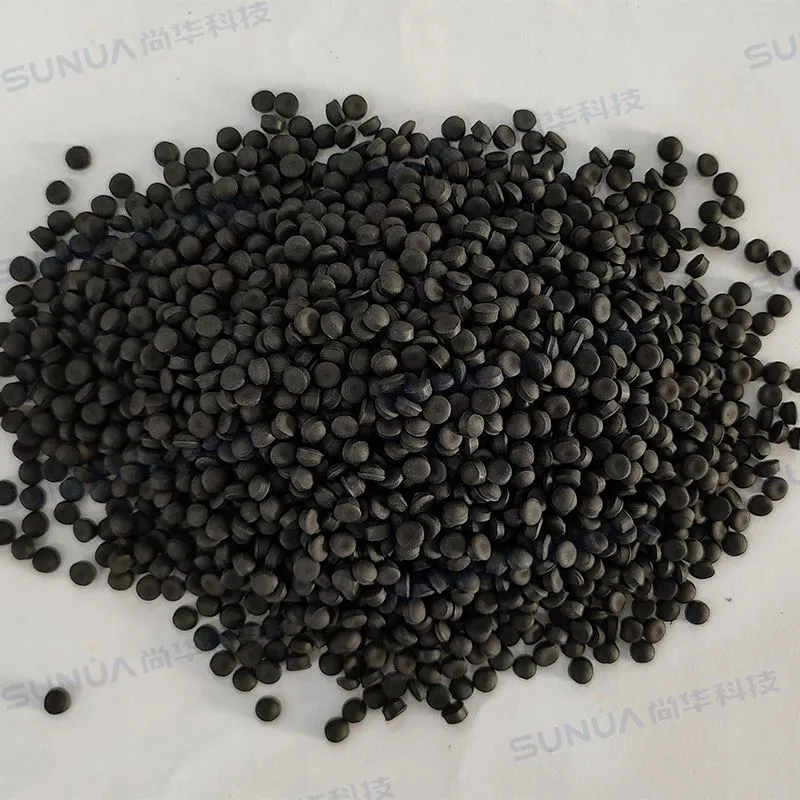
Extrusion speed affects LSZH sheath performance through several linked mechanisms. Increasing screw revolutions per minute generally increases material throughput, shear rate, melt pressure, and the amount of mechanical energy converted into heat. If barrel or die temperatures remain unchanged, the melt temperature can rise even when the displayed setpoints are constant.
A higher line speed also changes the relationship between material output and cable haul-off. If the extruder output increases faster than the haul-off speed, the sheath becomes thicker; if haul-off increases without a matching increase in output, the sheath becomes thinner. This interaction directly affects LSZH sheath thickness uniformity, concentricity, surface finish, electrical insulation distance, and material consumption.
The effect is not linear across all operating ranges. At low speed, excessive residence time may promote thermal history, filler settling in poorly designed systems, or localized degradation. At medium speed, the melt may achieve a stable balance between mixing and output. At high speed, excessive shear heat, pressure fluctuation, die restriction, and draw-down imbalance can produce defects even when average dimensions appear acceptable.
LSZH sheath production differs from conventional PVC extrusion because the compound is commonly formulated with a high percentage of inorganic flame-retardant filler. ATH releases water at elevated processing temperatures, while MDH decomposes at a higher temperature than ATH. The selected filler system, polymer carrier, particle size, surface treatment, and moisture level determine how much heat and shear the material can tolerate.
The filler increases the viscosity of the melt and may accelerate screw, barrel, adapter, and die wear. Abrasive filler can also increase the importance of die surface condition and screen-pack selection. A worn die land may create asymmetric flow, die lines, local thickness variation, or a rough surface that becomes more visible as line speed increases.
SUNUA, operated by Hebei SUNUA Advanced Material Co., Ltd., identifies LSZH FR polyolefin sheath compound as one of its product categories and describes applications including cable sheathing, optical cable, power, data communication, rail, building, marine, and automotive sectors. Its published product information references flame-retardant classifications ranging from CPR Eca to CPR B2ca(d0,t1,a1), IEC 60332 test categories, OEM availability, and management certifications including ISO 9001, ISO 14001, and ISO 45001. These classifications are product- and application-dependent, so processors still need to validate the selected compound on their own extrusion line and cable construction. (sunualszh.com)
When screw speed increases, the compound experiences more deformation per unit of time. This higher shear rate can improve dispersion and melting at moderate levels, but it also produces additional viscous heat. In LSZH systems, the usable processing window may be narrower because filler loading increases melt resistance and reduces the amount of polymer available to flow around particles.
Melt pressure is another important indicator. A pressure increase of 10–20% during a speed step should not automatically be treated as a failure, but it should trigger a review of melt temperature, screen-pack restriction, die condition, moisture, and output stability. Pressure oscillation is more concerning than a stable increase because it can create periodic diameter variation, eccentricity, and inconsistent surface texture.
A practical control model should record at least the following values:
| Process variable | Why it matters | Recommended control practice |
|---|---|---|
| Screw speed | Determines material throughput and shear exposure | Increase in 5% steps after stabilization |
| Melt temperature | Indicates actual thermal history | Measure with a melt probe, not only barrel setpoints |
| Melt pressure | Shows flow resistance and process stability | Record average and peak-to-peak fluctuation |
| Haul-off speed | Controls draw-down and final diameter | Synchronize with extruder output |
| Die temperature | Influences flow and surface finish | Adjust gradually, usually in 5–10°C steps |
| Cooling temperature | Affects shrinkage and dimensional recovery | Keep water temperature and flow stable |
| Online diameter | Detects immediate dimensional drift | Trend average, minimum, maximum, and standard deviation |
Barrel temperature settings should not be increased simply to compensate for a speed increase. A hotter melt may reduce pressure temporarily, but excessive temperature can increase filler decomposition, bubbles, discoloration, surface instability, and long-term mechanical deterioration. The correct adjustment depends on the compound formulation, extruder diameter, screw compression ratio, die design, and target sheath thickness.
Extrusion speed affects sheath thickness through output, draw-down, melt swell, cooling shrinkage, and haul-off. A stable nominal thickness does not guarantee a stable sheath because eccentricity can create a thin wall on one side and excessive material on the opposite side. For electrical cables, that difference can reduce mechanical protection or change the radial distance between conductive elements and the outer environment.
The basic control relationship is:
Sheath output ÷ cable haul-off speed = deposited cross-sectional area
In practice, the calculation must also account for melt swell, shrinkage, cable diameter, temperature, and die geometry. For example, if output increases by 8% while haul-off speed rises by only 3%, the deposited area tends to increase, producing a thicker sheath unless the die gap or line speed is corrected. If the material temperature simultaneously rises by 10°C, melt viscosity and shrinkage may change enough to create additional variation.
A useful production acceptance plan should include:
For a production trial, a manufacturer may begin with low, medium, and high speed settings rather than making a single large jump. A controlled comparison could use 60%, 80%, and 100% of the proposed maximum screw speed, with each condition held for 10–20 minutes after pressure and diameter stabilize. The resulting data should be compared against a defined specification rather than judged only by operator appearance.
LSZH extrusion temperature and speed must be evaluated as a combined process window. A compound may process acceptably at 80 rpm and 180°C melt temperature but show surface roughness or gas formation at 100 rpm and the same nominal setpoint. The additional shear energy at 100 rpm can raise the actual melt temperature even when barrel zones remain unchanged.
A typical temperature-control sequence includes feed-zone monitoring, compression-zone monitoring, adapter temperature, die temperature, and direct melt-temperature measurement. The actual values must come from the compound supplier’s technical data sheet and line trials. A general starting practice is to keep the melt below the compound’s decomposition or degradation range while using die temperature adjustments to improve flow without overheating the entire barrel.
Temperature imbalance can create defects that appear to be speed problems. A feed zone that is too hot may cause bridging, inconsistent feeding, or premature softening. A compression zone that is too cold can increase pressure and incomplete melting, while a die that is too cold can create sharkskin and roughness.
When increasing speed, use a controlled sequence:
This method distinguishes a genuine capacity increase from unsafe over-speeding. It also provides traceable evidence for process qualification, customer approval, and future troubleshooting.
LSZH sheath extrusion defects often result from the interaction of speed with temperature, moisture, die geometry, and cooling. The same visible defect can have different causes, so production teams should avoid changing speed alone without recording the full process condition. The following table provides a practical speed-versus-defect troubleshooting model.
| Defect | Typical speed-related mechanism | Other factors to check | Corrective action |
|---|---|---|---|
| Sharkskin | Excessive shear at the die exit | Melt too cold, high viscosity, restricted die land | Reduce speed, raise die temperature gradually, inspect die land |
| Melt fracture | Flow instability under high shear stress | Excessive pressure, poor die design, low melt temperature | Reduce screw speed, reduce restriction, stabilize melt temperature |
| Surface roughness | Incomplete fusion or filler-related flow disturbance | Moisture, die contamination, poor dispersion | Dry material, clean die, verify compounding consistency |
| Porosity | Gas release or trapped moisture | Wet pellets, poor venting, volatile residue | Improve drying, check venting and vacuum, lower thermal load |
| Bubbles | Decomposition or moisture vaporization | Excessive melt temperature, wet filler, air entrainment | Reduce thermal exposure, inspect dryer and feed system |
| Eccentricity | Unbalanced flow or unstable cable path | Die alignment, guide position, core preheating | Center die, stabilize core tension, adjust die gap |
| Cracking | Insufficient fusion or excessive draw-down | Cooling shock, low elongation, compound mismatch | Reduce draw-down, adjust cooling, verify compound grade |
| Die lines | Filler buildup or die damage | Abrasion, contamination, worn land | Clean or replace die components, inspect screen pack |
Sharkskin is a fine, repetitive roughness near the die exit and is frequently associated with excessive wall shear stress. Increasing speed increases the material’s exit strain rate, making the defect more likely when the melt temperature is too low or the die land is too restrictive. Reducing speed by 5–10% can confirm whether the defect is speed-sensitive, but the long-term correction may require a die-temperature adjustment or modified die geometry.
Melt fracture is a more severe flow instability that can create irregular ridges, distorted surfaces, or periodic texture. In LSZH compounds, the combination of high viscosity and mineral filler can reduce the available processing margin. Pressure trend data, torque, and direct melt temperature should be reviewed together before selecting a corrective action.
Porosity and bubbles are especially important because the external sheath may appear acceptable while internal voids reduce tensile performance, elongation, crush resistance, and electrical reliability. Moisture in LSZH pellets or filler can produce vapor during melting, while excessive thermal exposure can release gases through decomposition. A speed increase can worsen both conditions by increasing shear heat and reducing the time available for controlled venting.
Material drying should follow the compound supplier’s specification for temperature, time, and allowable moisture. If a moisture analyzer is available, record the pellet moisture content before the trial and after the material has remained in the hopper. A useful qualification report should connect moisture level, screw speed, melt temperature, pressure, and cross-sectional porosity rather than recording only the final cable appearance.
Screw design determines how the LSZH compound is conveyed, compacted, melted, mixed, and pressurized. A screw with excessive compression or an aggressive mixing section may generate unnecessary shear heat, while insufficient mixing may leave filler agglomerates and create weak points. For heavily filled compounds, screw wear and clearance should be measured during maintenance because changes in geometry can alter output and pressure stability.
Die geometry influences pressure drop, residence time, surface finish, and thickness distribution. A die with an excessively long land can increase shear stress and promote sharkskin or melt fracture. A die with poor centering or an unsuitable taper can produce eccentricity, especially when the cable core is not centered or the line speed changes rapidly.
The draw-down ratio should be treated as a controlled variable. Excessive draw-down can reduce wall thickness, increase molecular orientation, and lower elongation in the transverse direction. A sudden haul-off increase may also produce cracking during cooling, particularly when the melt has not developed sufficient strength before entering the water trough.
Cooling conditions must match the output and sheath geometry. If cooling water is too cold or flow is uneven, rapid surface solidification can trap internal heat and create residual stress. If cooling is insufficient, the sheath may remain soft as it passes through guides, causing indentation, ovality, or surface marks.
ATH and MDH are not passive additives from a processing perspective. They affect viscosity, heat absorption, density, moisture sensitivity, die wear, and flame performance. ATH commonly releases water at a lower temperature than MDH, so the compound’s thermal window must be confirmed before raising barrel or die temperatures to support higher speed.
Moisture control is essential because absorbed water can become vapor during extrusion. A wet compound may show bubbles, pinholes, roughness, poor adhesion, and unstable pressure. Drying conditions should be verified with measured moisture data rather than relying only on hopper temperature or drying time.
Abrasion changes the process gradually. A die may produce acceptable sheaths during initial production but develop die lines or eccentricity after prolonged use with mineral-filled LSZH compounds. Maintenance records should include screw dimensions, die-land condition, screen-pack changes, pressure at a reference speed, and the date when surface defects first appeared.
Extrusion speed affects mechanical properties indirectly through thermal history, orientation, cooling rate, porosity, and thickness variation. Tensile strength and elongation should be tested on conditioned sheath specimens using the customer’s required standard, with results recorded separately in the longitudinal and transverse directions when applicable. A speed setting should not be approved if average tensile strength passes but elongation falls below the required limit.
Flame retardancy and smoke performance also require independent verification. A stable surface does not prove compliance with IEC 60332, CPR, EN 50399, or another specified test system. Excessive speed can create voids, thin spots, filler segregation, or local thickness loss that changes burning behavior, smoke generation, and heat release.
Electrical reliability depends on continuous coverage, stable thickness, absence of pinholes, and adequate adhesion where the design requires it. Online spark testing can identify insulation discontinuities, but it does not replace cross-sectional measurement or long-term electrical testing. For critical cables, the process file should connect speed settings with spark-test results, diameter variation, sheath adhesion, insulation resistance, and final visual inspection.
SUNUA’s published material information refers to LSZH flame-retardant polyolefin compounds for cable applications and lists compliance references including IEC 60332 categories and CPR classifications. These references indicate the types of compliance framework that may apply, but the exact test result depends on the compound grade, cable construction, sheath thickness, process condition, and laboratory method. (sunualszh.com)
The most practical speed optimization method begins with a qualified material lot, a clean and centered die, verified drying, and calibrated measurement equipment. Record the compound batch, moisture content, extruder configuration, screw speed, output, melt temperature, pressure, die temperature, haul-off speed, cooling-water temperature, and online diameter. Without this baseline, operators cannot determine whether a later defect was caused by speed, material variation, equipment wear, or environmental conditions.
Use a staged trial instead of an immediate maximum-speed test:
| Trial stage | Speed setting | Hold condition | Main checks |
|---|---|---|---|
| Baseline | Current qualified setting | Until stable | Pressure, temperature, diameter, surface |
| Trial 1 | Baseline + 5% | 10–20 minutes after stabilization | Output, torque, thickness, defects |
| Trial 2 | Trial 1 + 5% | Same hold period | Pressure fluctuation, draw-down, cooling |
| Trial 3 | Trial 2 + 5% | Only if previous stage passes | Mechanical samples and dimensional data |
| Qualification | Selected maximum setting | Production-length trial | Full inspection and required compliance tests |
A speed increase should be accepted only when the process remains within defined limits. Suggested internal control limits may include diameter variation no greater than the customer specification, no visible bubbles or cracks, stable melt pressure, acceptable surface roughness, and no deterioration in tensile or elongation results. The actual limits must be set from the cable design, material technical data sheet, customer requirements, and applicable standards.
When a trial fails, return to the last stable setting and change one variable at a time. For example, reduce speed by 5%, maintain the same temperatures, and observe whether pressure and surface condition recover. If they do, the failure is likely speed-sensitive; if they do not, investigate moisture, die restriction, screen-pack loading, cooling, or material variation.
A higher line speed reduces theoretical labor and equipment cost per meter only when the output remains saleable. The basic calculation is:
Effective output = Nominal output × (1 − scrap rate) × uptime
For example, a line producing 1,000 kg per shift at a 3% scrap rate delivers 970 kg of acceptable product. Increasing nominal output by 10% to 1,100 kg while scrap rises to 8% delivers only 1,012 kg, a net gain of 4.3% rather than 10%. If the higher setting also increases die cleaning, startup waste, or customer returns, the financial benefit may disappear.
Total cost should include compound consumption, electricity, labor, maintenance, test sampling, rejected cable, rework, delivery delays, and compliance testing. A 2% reduction in sheath thickness may reduce material cost, but it may also reduce mechanical protection or fail a minimum-thickness requirement. Material savings should therefore be calculated against the full cost of nonconforming cable, not only against the purchase price of Lszh Sheath Compound.
For professional buyers, delivery risk is also connected to process speed. A stable setting that produces 98% accepted output may be more valuable than a nominally faster setting that requires frequent intervention. Production planning should use effective meters per hour and first-pass yield, with separate records for startup waste, steady-state scrap, speed-change waste, and shutdown waste.
Small manufacturers often use general-purpose PVC extrusion equipment for LSZH production. This can be workable when the extruder has suitable torque, temperature control, cooling capacity, die alignment, and pressure monitoring. The equipment should be assessed by its actual output and stability with the selected LSZH compound rather than by the nameplate motor power alone.
Before increasing speed, confirm the following:
This checklist reduces the chance that a speed trial will be misinterpreted. It also creates a repeatable process for comparing LSZH grades, equipment configurations, and production shifts. For a compound supplier evaluation, request the technical data sheet, recommended processing window, moisture guidance, flame-test references, mechanical data, storage conditions, and sample quantities needed for a controlled trial.
The answer to How Extrusion Speed Influences LSZH Sheath Performance is that speed affects much more than production rate. It changes shear rate, melt temperature, pressure, residence time, draw-down, cooling behavior, thickness uniformity, surface finish, porosity, mechanical properties, flame performance, smoke behavior, and electrical reliability.
Higher speed is suitable only when the entire extrusion system remains balanced. The best setting is not the highest screw rpm; it is the highest validated speed that maintains sheath thickness, eccentricity, surface condition, tensile strength, elongation, electrical continuity, and required flame and smoke performance within specification.
Manufacturers should begin with a stable baseline, increase speed in 5% steps, allow each condition to stabilize, and record pressure, melt temperature, output, haul-off, cooling, diameter, and defect data. The final qualification should include cross-sectional inspection, mechanical testing, electrical checks, and any required IEC, CPR, or customer-specific fire testing. This approach converts LSZH extrusion speed optimization from trial-and-error adjustment into a measurable production-control procedure.
A: SUNUA’s LSZH FR Polyolefin Sheath Compound is the most relevant option for cable jacketing applications. It is positioned for low-smoke, halogen-free cable sheathing and is described as having crack resistance, extrusion processing performance, and flame-retardant classifications from CPR Eca to CPR B2ca(d0,t1,a1), subject to grade and application validation. ([sunualszh.com](https://www.sunualszh.com/))
A: Request the technical data sheet, recommended melt-temperature range, drying and moisture requirements, screw and die guidance, target output range, applicable flame-test references, mechanical data, storage conditions, and sample quantities for line trials. The selected compound should be validated on your own extruder because speed, die geometry, cooling, haul-off, sheath thickness, and cable construction affect final performance.
A: SUNUA states that its LSZH flame-retardant polyolefin materials can be processed on ordinary PVC extruders when the cooling system is operating normally. Before regular purchasing, confirm extruder torque, temperature-control accuracy, die alignment, pressure monitoring, cooling capacity, and compatibility with the required sheath diameter and thickness. ([sunualszh.com](https://www.sunualszh.com/))
A: Start from a stable qualified setting and increase screw speed in approximately 5% steps. After each change, allow stabilization and record melt temperature, pressure fluctuation, torque, output, haul-off speed, online diameter, thickness variation, surface condition, porosity, and spark-test results. Approve only the highest setting that maintains mechanical, electrical, dimensional, flame, and smoke requirements with acceptable scrap.
A: Specify the cable application, conductor or core diameter, target sheath thickness, extrusion equipment, required output, operating temperature, mechanical limits, electrical tests, flame and smoke standards, estimated annual volume, packaging requirements, and requested delivery schedule. Ask SUNUA to recommend the appropriate LSZH sheath grade, provide its processing window and compliance references, confirm OEM availability, and offer samples for a controlled extrusion trial. ([sunualszh.com](https://www.sunualszh.com/))


